Menu
Same-Day Service Available!
A carpet can look perfectly clean while still holding onto unpleasant smells. Many homeowners notice this after rainy weather, pet accidents, heavy foot traffic, or everyday family activity. One room may smell fresh in the morning and stale again by evening. Air fresheners may temporarily cover the odor, but the smell often returns because the source is still trapped deep inside the carpet fibers.
Families in San Antonio deal with heat, humidity, dust, mud, and constant indoor activity throughout the year. Carpets absorb all of it. Shoes bring in outdoor dirt. Pets leave oils and odors behind. Food spills settle into the padding. Moisture from drinks, mopping, or wet feet can create musty smells over time.
Many homeowners try quick fixes before scheduling professional carpet cleaning. Simple DIY carpet deodorizer methods can absolutely help freshen the home when used correctly. A few safe ingredients can reduce odors, improve freshness, and help maintain carpets between deep cleaning services.
Safe-Dry® has spent more than 30 years helping families create cleaner and healthier homes with low-moisture carpet cleaning methods that dry quickly and leave no sticky residue behind. While professional carpet cleaning provides deeper odor elimination, homeowners can still make a big difference with proper routine care.
Carpet odors rarely come from just one source. Most smells build slowly over time as particles settle deep into the carpet.
Common causes include:
Even clean-looking carpets may contain trapped debris underneath the surface.
Homes with pets often deal with stronger odor problems because carpets absorb fur, dander, oils, and moisture daily. Pet urine removal becomes especially important because urine can soak through the carpet backing into the padding underneath.
Once odors reach the padding, regular vacuuming may not fully solve the problem.
Many odors react to humidity and heat. During warm weather, trapped moisture inside carpet fibers can reactivate old smells.
A spill that seemed gone months ago may suddenly smell stronger again during humid conditions.
Pet odors also become more noticeable over time because bacteria continue growing beneath the carpet surface.
Ignoring odors early often leads to:
Routine carpet cleaning helps remove the particles causing the odor instead of simply masking it.
DIY carpet deodorizer methods can help freshen carpets naturally between professional cleanings. While they may not fully replace deep carpet cleaning services, they are often a helpful part of regular home maintenance. Many homeowners enjoy using simple deodorizing methods because they are easy to manage during busy daily routines and can improve the overall freshness of the home without requiring expensive products.
Carpets go through constant wear every day. Shoes track in dirt from outside. Pets leave behind odors and dander. Food crumbs settle deep into the fibers. Even everyday moisture from humidity or spills can slowly create stale smells over time. DIY carpet deodorizer solutions help reduce these odors before they become overwhelming.
Many families prefer homemade solutions because they offer several practical benefits for day-to-day carpet care.
One of the biggest reasons homeowners choose DIY carpet deodorizer methods is affordability. Most homemade carpet freshening solutions use simple ingredients already found in the kitchen or laundry room. Baking soda, white vinegar, club soda, and mild essential oils are usually inexpensive compared to constantly buying specialty carpet sprays or heavy chemical cleaners.
For larger households with kids or pets, frequent carpet maintenance can become expensive if store-bought products are used every week. Homemade deodorizing solutions provide a budget-friendly option that still helps keep carpets smelling cleaner between professional carpet cleaning appointments.
Families trying to balance home maintenance costs often appreciate simple methods that work without adding unnecessary expenses.
Many DIY carpet deodorizer recipes only take a few minutes to prepare. Homeowners do not need special equipment or complicated cleaning systems to refresh their carpets.
Simple ingredients often include:
Because these ingredients are commonly available, homeowners can respond quickly to odors, spills, or pet accidents without making a trip to the store first.
Quick access to simple cleaning solutions also helps encourage faster cleanup, which is important for preventing long-term carpet odor problems.
Busy households often need fast cleaning solutions that fit into daily life. Parents juggling school schedules, work responsibilities, pets, and household chores may not always have time for deep carpet cleaning every week.
DIY carpet deodorizer methods work well for quick maintenance between professional cleanings. A simple baking soda treatment can freshen a room overnight while requiring very little effort.
Many homeowners appreciate how convenient these methods are because they can:
Convenience becomes especially important in homes with children and pets where messes happen regularly.
Families are often more cautious about the products used inside their homes, especially around young children or animals. Some store-bought carpet sprays contain strong perfumes or chemicals that may irritate sensitive individuals.
Many DIY carpet deodorizer methods use gentler ingredients that homeowners already trust for regular household use. Baking soda, for example, is widely used because it helps absorb odors naturally without heavy fragrances.
Even with homemade methods, safety still matters. Certain essential oils or stronger ingredients like borax should always be used carefully around pets and children. Homeowners should still research ingredients before applying them widely.
Families searching for eco friendly carpet cleaning solutions often appreciate more natural approaches because they align with healthier home goals.
Regular carpet care helps prevent odors from building up over time. DIY deodorizing works best as part of a larger carpet maintenance routine rather than as a one-time fix.
Simple deodorizing can help:
Routine maintenance also helps homeowners notice stains or odor problems earlier before they become harder to remove.
Consistent care often makes carpets easier to maintain long term.
Odors become harder to remove once they soak into the carpet backing or padding underneath. Quick deodorizing after spills, pet accidents, or heavy foot traffic can help reduce smells before they settle deeper into the carpet fibers.
Surface odors from:
can often improve significantly with consistent deodorizing and vacuuming.
Addressing odors early may also help reduce the risk of long-term moisture or bacteria buildup inside the carpet.
Fresh-smelling carpets can completely change how a home feels. Lingering odors often make rooms seem dirtier even when they appear visually clean.
DIY carpet deodorizer methods help create a more inviting atmosphere by improving freshness throughout the home. Many families notice that rooms feel lighter, cleaner, and more relaxing after even a simple carpet freshening treatment.
Fresh carpets also contribute to a healthier-feeling indoor environment, especially in homes where family members spend a lot of time on the floor, playing with children, or relaxing with pets.
While professional carpet cleaning still provides the deepest level of odor removal and cleaning, regular DIY maintenance can help homeowners enjoy cleaner-smelling carpets more consistently between appointments.
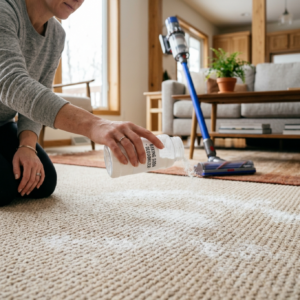
Baking soda remains one of the most trusted carpet deodorizing ingredients for a reason.
It naturally absorbs odors instead of covering them with heavy perfumes.
Baking soda can help:
It works especially well for light odors caused by shoes, pets, cooking smells, or daily household activity.
Always vacuum before deodorizing. Removing loose dirt and debris helps the baking soda reach deeper into the carpet fibers.
Focus on:
Apply a thin, even layer across the carpet.
Avoid dumping large piles in one area. A light coating usually works best.
Allow the baking soda to remain on the carpet for at least 30 minutes.
For stronger odors, leaving it overnight may improve results.
Vacuum slowly to remove all remaining powder from the carpet fibers.
A second vacuum pass often helps lift extra residue.
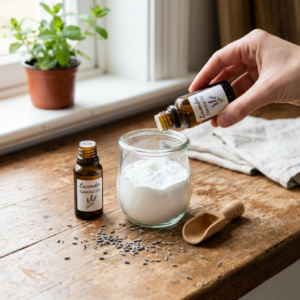
Some homeowners prefer adding mild scents to their carpet deodorizer mixture.
Essential oils can help create a fresher smell when used carefully.
Popular options include:
Mix:
Shake thoroughly before sprinkling lightly onto the carpet.
Families with pets or small children should use caution with essential oils because some oils may irritate sensitive animals.
Natural herbs can also help refresh carpets.
Some homeowners mix dried herbs or spices with baking soda for a softer scent without strong chemicals.
Popular choices include:
This DIY carpet deodorizer approach may help rooms feel fresher while reducing mild household odors.
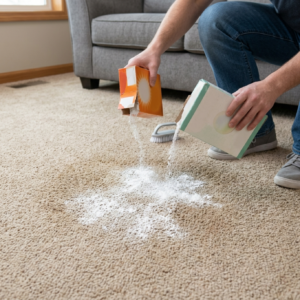
Borax can provide stronger odor-fighting support for heavily affected areas.
However, homeowners should use caution around pets and small children because borax is not considered fully pet-safe if ingested.
Mix:
Apply lightly and vacuum thoroughly afterward.
This method may help with stronger pet odor removal or stubborn smells trapped in older carpets.
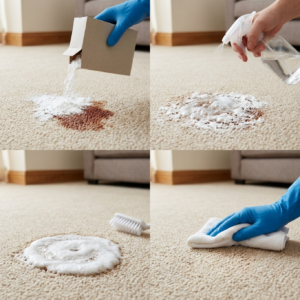
Vinegar works differently than baking soda.
When combined carefully, baking soda and vinegar create a fizzing reaction that may help loosen stains and surface odors.
Never soak the carpet immediately.
Use a towel to absorb as much liquid as possible before cleaning.
Apply a small amount over the affected area.
Use a spray bottle to lightly mist white vinegar over the baking soda.
Fizzing is normal.
After the fizzing stops, blot gently and allow airflow to dry the carpet completely.
This method may help with carpet stain removal and mild odor elimination.
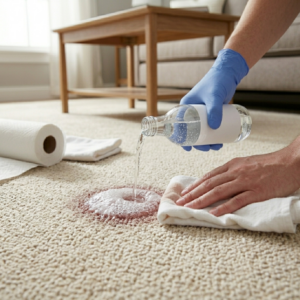
Club soda can help reduce fresh stains before they settle permanently.
Its carbonation may help lift particles from carpet fibers.
Absorb excess liquid first.
Pour a small amount directly onto the stained area.
Use a clean towel to absorb moisture and stain particles.
Avoid scrubbing aggressively because this spreads the stain deeper.
Homemade methods can help with mild surface odors, but deeper problems often remain underneath.
DIY deodorizing may fail when:
Strong odors usually require deeper carpet cleaning methods.
Homes with pets often need more frequent carpet cleaning because carpets absorb daily pet activity quickly.
Pet-related odor issues may include:
Even well-trained pets can leave oils, saliva, and dander behind over time.
Pet urine carpet cleaning becomes more difficult once moisture reaches the carpet backing and padding.
Air fresheners only cover odors temporarily.
Many sprays mix with existing smells instead of eliminating them completely.
True odor elimination requires removing the particles causing the odor.
Professional carpet cleaning helps extract trapped debris instead of masking it.
Vacuuming remains one of the most important parts of carpet maintenance.
Regular vacuuming helps remove:
High-traffic areas should ideally be vacuumed several times per week.
Families searching for carpet cleaning near you often discover their carpets stay fresher longer simply by improving routine maintenance habits.
Different stains require different cleaning approaches.
Coffee spills behave differently than pet accidents or grease stains.
Using the wrong DIY solution can set stains deeper into the carpet.
Understanding the stain first helps determine the safest carpet cleaning method.
Too much water causes serious carpet problems.
Oversaturated carpets may develop:
Professional carpet cleaning methods use controlled moisture levels to reduce these risks.
Safe-Dry® focuses on low-moisture cleaning designed to dry quickly while reducing residue buildup.
Strong chemicals may damage carpet fibers permanently.
Some store-bought cleaners leave sticky residue behind, which attracts dirt faster.
Avoid products containing:
Eco friendly carpet cleaning methods often use gentler cleaning approaches that are safer around families and pets.
Small carpet problems grow quickly when ignored.
Routine carpet cleaning helps prevent:
Regular care also extends carpet life.
DIY maintenance supports cleaner carpets, but professional carpet cleaning reaches deeper layers household vacuums cannot fully clean.
Professional deep cleaning services help remove:
Families often notice carpets feeling softer, fresher, and cleaner afterward.
Safe-Dry® uses a low-moisture carpet cleaning process designed for healthier homes.
The cleaning approach focuses on:
Quick drying also helps reduce downtime for busy households.
Wet carpets can create new odor problems if they stay damp too long.
Quick-drying carpet cleaning helps reduce the risk of:
Families often prefer faster drying because rooms return to normal sooner.
Dirty carpets can affect indoor air quality more than many homeowners realize.
Carpet fibers trap:
Routine carpet cleaning helps remove these contaminants from the home environment.
Shoes track dirt, oils, and bacteria onto carpet fibers daily.
Fresh stains are easier to remove than old stains.
Entry points collect the most dirt from outside.
Area rug cleaning becomes easier when rugs can be cleaned regularly.
Homes with pets or children may benefit from professional carpet cleaning every 6 to 12 months.
Watch for these warning signs:
Professional carpet cleaning can help restore freshness before replacement becomes necessary.
Many homeowners schedule multiple services together for a more complete home refresh.
Additional services may include:
Combining services may help improve overall home freshness more effectively.
Many homeowners search for affordable carpet cleaning or carpet cleaning deals while still wanting quality service.
The cheapest option is not always the safest choice.
Proper carpet cleaning protects flooring investments while helping carpets last longer.
Families searching for carpet cleaning prices often discover that preventative maintenance costs far less than carpet replacement.
Homes in San Antonio experience heavy foot traffic, outdoor dust, humidity, and family activity year-round.
Professional carpet cleaning helps maintain fresher carpets despite these challenges.
Homeowners often look for:
Choosing experienced professionals helps homeowners avoid unnecessary carpet damage from improper cleaning methods.
Yes. Baking soda is generally safe for most carpets when vacuumed thoroughly afterward.
White vinegar is usually safe in small diluted amounts, although testing a hidden area first is important.
Homes with pets or heavy traffic may benefit from deodorizing every few weeks.
Mild odors may improve, but deep urine odors often require professional pet urine removal treatments.
Moisture trapped inside the carpet padding may reactivate hidden odors if drying was incomplete.
Most homes benefit from professional carpet cleaning every 6 to 12 months depending on traffic levels.
Low-moisture methods often dry faster and help reduce residue buildup compared to overly wet cleaning approaches.
Fresh-smelling carpets help a home feel cleaner, healthier, and more comfortable for the entire family. DIY carpet deodorizer methods can help maintain freshness between cleanings, especially when paired with consistent vacuuming and quick stain care.
Families in San Antonio dealing with stubborn odors, pet accidents, recurring stains, or deep carpet buildup can benefit from professional carpet cleaning designed around safe and family-friendly care.
Safe-Dry® provides low-moisture carpet cleaning, upholstery cleaning, odor elimination, rug cleaning, and pet stain removal services that help homes feel fresher without long drying times or heavy residue.
Homeowners wanting a cleaner and healthier home can request a free carpet cleaning quote or connect with Safe-Dry® to learn more about professional deep cleaning services. If you would like more simple carpet care ideas, you can also check out the original DIY deodorizer inspiration shared on Safe-Dry®’s social channel.